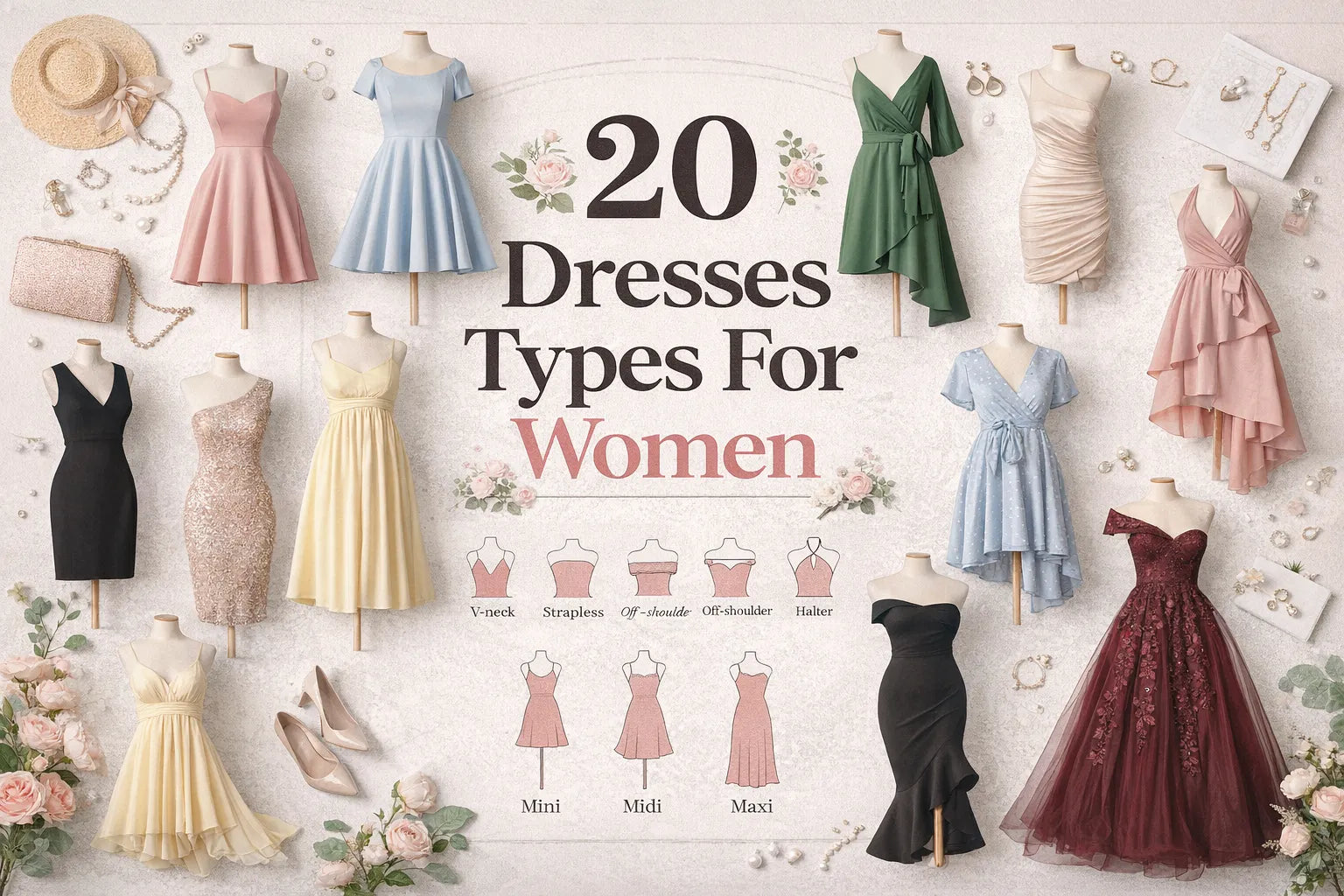
20 Dresses Types For Women || Iqra F. Chaudhry
Dress types for women are names used in fashion to describe a dress by its silhouette and cut, then sort it further by length, neckline, body-fit match, and purpose. I covers 20 main silhouettes by shape and cut, then groups dress length into three standard ranges (mini, midi, maxi), body-fit selection into five common body types (pear, apple, hourglass, rectangle, inverted triangle), neckline into eight common families (crew, scoop, V-neck, sweetheart, off-shoulder, one-shoulder, halter, strapless), and purpose into four wardrobe uses (work, casual, formal, party).
The best choice starts with where the dress gets worn, then the venue rules and weather, then the silhouette that balances proportions, then the fabric that feels right for the season and movement.

A-line dress
An A-line dress holds a closer line through the upper body and widens toward the hem, which creates a clean “A” outline. The shape suits long days because the skirt gives walking space and sits comfortably during meals and meetings. In the modern wardrobe, this silhouette earned its “classic” status in mid-20th-century fashion because it flatters without drama.
Mini, midi, and maxi lengths work, with midi acting as the safest middle ground. Pear shapes benefit because the hem widens in a way that balances the hips, and scoop, V-neck, or sweetheart necklines keep the top half in proportion. Cotton poplin, crepe, denim, wool blends, and satin show up often because they hold the skirt shape. Work settings, casual plans, formal daytime events, and parties all fit this type when accessories stay simple, like a belt, small earrings, and tidy shoes.
Fit-and-flare dress
A fit-and-flare dress grips at the bodice and waist, then opens into a fuller skirt from the waist seam. That waist seam does the heavy lifting by defining shape, while the skirt keeps movement easy for walking, dancing, and standing for long stretches. The silhouette became a steady favorite in ready-to-wear because it solves “I want shape, not squeeze” in one cut. Mini, midi, and maxi lengths appear, though midi and knee-length versions show up most in day-to-evening wear.
Rectangle figures gain curves from the defined waist, and sweetheart, V-neck, or boat necklines keep the balance clean. Cotton sateen, jacquard, taffeta, crepe, and ponte knit work well because the skirt needs body. It fits work, casual events, parties, and many semi-formal settings, paired with a small clutch, modest jewelry, and shoes that match the skirt’s swing.
Sheath dress
A sheath dress follows the bust, waist, and hips in a close, straight line with little skirt flare. The cut suits offices and formal dinners because it reads disciplined and stays tidy in photos and in person. Its long life in women’s wardrobes comes from tailoring logic: a simple line, controlled fit, and easy layering under blazers and coats.
Midi and knee-length versions lead the category, with mini and maxi used less. Hourglass shapes suit it because the fit respects natural proportions, and boat, crew, or V-neck necklines keep the top structured. Wool crepe, stretch ponte, and crepe blends work well because they hold shape without wrinkling fast. The purpose leans toward work and formal wear, and accessories stay restrained so the cut keeps the spotlight.
Shift dress
A shift dress falls straight from the shoulders with light shaping and minimal waist definition. Comfort drives the design, so hot weather, travel days, and long hours in a chair feel easier in this cut. The look gained wide recognition during earlier straight-cut eras and saw a strong mainstream return in the 1960s, which is why it still reads familiar. Mini and midi lengths dominate, with maxi used less.
Apple and rectangle figures benefit because the cut avoids tight focus at the waist, and crew, boat, or scoop necklines keep the line simple. Linen, cotton, chambray, crepe, and light wool fit the style. Casual wear and relaxed office dress codes suit it best, paired with flats, loafers, and a small crossbody bag.
Wrap dress
A wrap dress closes by crossing the front panels and tying at the waist or side. The tie gives practical control over fit, which helps during days when comfort matters more than perfect measurements. Modern wardrobes kept it in rotation since the late 20th century because it adapts to many settings with small styling changes. Mini, midi, and maxi lengths appear across brands.
Apple and hourglass shapes benefit because the tie creates a clear waist line, and the neckline naturally forms a V front that frames the upper body. Jersey, crepe, silk, and viscose work well because they drape across the wrap without bulky seams. It fits workdays, casual lunches, and parties, finished with low heels, a neat bag, and jewelry that does not compete with the tie detail.
Empire waist dress
An empire waist dress places the seam under the bust and lets the skirt fall from that high point. The cut favors comfort and airflow because the midsection stays free, which makes it popular for summer heat and pregnancy-friendly styling. The silhouette dates to early 19th-century fashion, which explains its “timeless” label in many catalogs. Midi and maxi lengths fit the style best, with mini used less.
Apple and pear shapes benefit because the seam lifts the visual waist and draws attention upward, and scoop, square, or sweetheart necklines match the bodice shape well. Chiffon, voile, georgette, muslin, and soft satin suit the falling skirt. Casual daytime events and formal outdoor occasions both fit, paired with delicate jewelry and light shoes.
Dropped-waist dress
A dropped-waist dress sets the waist seam below the natural waist, closer to the hips. That lowered seam changes the body’s visual proportions, which suits straight silhouettes and long torsos. The style ties strongly to 1920s fashion, where the lowered waist helped create a relaxed, youthful line. Mini, midi, and maxi versions exist, though party and evening versions tend to run longer.
Rectangle figures benefit because the seam placement breaks up a straight line, and boat, crew, or halter necklines work well with the vintage-leaning shape. Crepe, satin, chiffon layers, and beaded fabrics show up in dressier designs. Party and formal use fit best, supported by simple heels and long jewelry that respects the lowered seam.
Peplum dress
A peplum dress adds a short flounce at the waist, creating a strong waist-to-hip contrast. The detail helps when the goal is a defined waist effect without a tight skirt. The peplum idea dates back to classical dress and returns in modern cycles because it changes proportions quickly.
Midi lengths appear most, since the waist detail already carries attention. Rectangle shapes benefit because the flounce creates curves, and boat, V-neck, or sweetheart necklines keep the upper line sharp. Ponte knit, jacquard, crepe, and structured satin hold the flounce shape well. It fits work events and parties, finished with clean heels and minimal jewelry so the flounce stays the main feature.
Bodycon dress
A bodycon dress uses stretch fabric to fit close to the body and follow the body line. The style suits nights out and party settings, though movement feels more controlled because the fit stays tight. The look rose with modern stretch textiles and “body-conscious” styling that became popular once fabrics started doing more work.
Mini and midi lengths lead, with maxi used less. Hourglass figures suit it because the cut follows natural curves, and scoop, one-shoulder, or strapless necklines match the fitted mood. Jersey, rib knit, stretch ponte, and bandage-style knits appear often. Purpose stays in the party lane, and accessories work best when they stay simple, since the dress already speaks loudly.
Trumpet dress
A trumpet dress stays fitted through the hips and thighs, then flares below mid-thigh into a controlled skirt. The flare gives drama without locking the knees as tightly as some ultra-fitted shapes. Formalwear keeps this cut in steady use because it photographs well and looks deliberate from every angle.
Midi and maxi lengths exist, with maxi leading. Hourglass shapes benefit because the flare highlights hip-to-knee proportion, and sweetheart, off-shoulder, or halter necklines balance the fitted skirt. Satin, crepe, lace overlays, and structured linings support the flare. It fits formal events and parties, paired with drop earrings and a compact clutch.
Mermaid dress
A mermaid dress stays fitted through the knee, then flares strongly at or below the knee. The silhouette signals high formality and stage presence, which is why bridal and gala wear keep it close. Maxi length dominates because the flare needs room to read correctly. Hourglass figures benefit because the fit tracks bust, waist, and hips in one line, and sweetheart, strapless, or off-shoulder necklines match the dramatic lower half.
Satin, mikado, heavy crepe, and lace work well because structure matters. Formal use fits best, and accessories tend to focus on the face, since the skirt already pulls attention downward.
Ball gown
A ball gown uses a fitted bodice and a very full skirt, often supported by layers beneath. The shape carries old-school ceremony energy, the kind that says “formal” before anyone checks the invitation. The silhouette connects to court dress and long-standing evening traditions, which explains its lasting place in formalwear. Maxi length comes by definition. Inverted triangle shapes benefit because the full skirt balances broader shoulders, and strapless, sweetheart, or off-shoulder necklines match the gown’s scale.
Tulle, organza, satin, mikado, and brocade support volume well. Formal purpose leads, and accessories scale up with the dress, like statement earrings and a structured clutch.
Princess (gown style)
A princess gown style relies on long shaping seams that run from the upper bodice down into the skirt, forming one continuous line. Seamwork creates structure without a harsh waist break, which helps the dress look refined and traditional. Bridal fashion kept this cut in steady use because the seam lines shape the body while staying classic.
Maxi length appears most. Pear shapes benefit because the skirt and seam lines balance the hips, and sweetheart, V-neck, or illusion necklines suit the formal construction. Satin, lace, mikado, and layered tulle appear often. Its purpose stays formal, finished with classic shoes and jewelry that does not fight the seam lines.
Column dress
A column dress falls in a narrow, straight line with minimal flare, which creates a tall, clean outline. The cut suits minimalist formal styling because it avoids extra volume and keeps the eye moving vertically. The idea echoes older draped garment lines and later modern minimal fashion for the same reason: the body looks longer. Midi and maxi lengths appear most. Rectangle shapes benefit because the straight cut matches proportion, and halter, one-shoulder, or boat necklines support the clean line. Crepe, silk, satin, and jersey work well. Formal purpose leads, paired with sleek heels and a compact bag.
Tent dress
A tent dress flares from the shoulders or upper chest with little waist shaping, creating a roomy triangle-like outline. The cut suits heat and long wear because the torso stays free and the fabric breathes. The silhouette rose in popularity during mid-century fashion shifts toward freer shapes, which is why it still reads playful and bold. Mini and midi lengths show up most. Apple shapes benefit because the cut avoids waist pressure, and crew or boat necklines keep the upper line simple. Linen, cotton, gauze, and light blends fit the style. Casual purpose fits best, paired with flat sandals and an easy bag.
Tulip dress
A tulip dress uses an overlapping skirt that forms a petal-like shape near the hem. The overlap adds controlled volume at the hips, which helps create curve without a full skirt. Modern patternmaking keeps this skirt idea in rotation because it changes the silhouette with one smart overlap. Mini and midi lengths lead. Rectangle shapes benefit because the skirt adds shape, and V-neck or sweetheart necklines match the dress’s dressy direction. Crepe, satin, and structured blends help the overlap hold. Party wear fits best, finished with pointed-toe heels and a small clutch.
High-low dress
A high-low dress keeps the hem shorter in front and longer in back. The front hem makes walking easier and shows shoes, while the longer back keeps a formal line for photos and entrances. Trend cycles bring it back because it changes formality without changing the bodice.
The typical length setup is a midi front with a maxi back. Pear shapes benefit because the longer back balances proportions, and strapless or halter necklines keep the top clean while the hem carries attention. Chiffon, tulle, satin, and layered fabrics drape well. Formal and party use fit best, paired with ankle-strap heels and a compact bag.
Bubble dress
A bubble dress forms a rounded hem by tucking fabric inward, creating a puffed shape at the bottom. The hem becomes the statement, so the style fits playful parties and short formal events. Modern fashion returns to sculpted hems because they feel fun and a little rebellious, like a dress that refuses to behave.
Mini and short midi lengths appear most. Inverted triangle shapes benefit because hem volume balances the shoulders, and strapless or sweetheart necklines match the bold shape. Taffeta, satin, organza, and stiff blends hold the bubble well. Party purpose leads, with accessories kept simple.
Handkerchief-hem dress
A handkerchief-hem dress uses an uneven hem with pointed drops, like corners hanging down. The hem creates movement and airflow, which suits warm weather and outdoor events. Uneven hems show up across folk-influenced and bohemian styling, which explains why the name never really leaves. Midi and maxi lengths appear most.
Apple shapes benefit because the hem draws the eye downward, and halter or V-neck necklines keep the line open. Chiffon, georgette, rayon, and soft knits drape well. Casual events and parties fit best, paired with flat sandals and relaxed jewelry.
Asymmetrical dress
An asymmetrical dress uses intentional imbalance in the neckline, hem, or drape, such as a one-shoulder cut or an angled hem. Diagonal lines shape the visual flow, which helps add interest without extra print or heavy detail. Designers use asymmetry across many eras because it breaks the “same-same” feeling while staying elegant. Mini, midi, and maxi lengths all appear. Rectangle shapes benefit because diagonal lines create shape, and one-shoulder or halter necklines match the concept.
Crepe, satin, jersey, and draped fabrics support clean tension lines. Party and formal use fit best, with accessories kept focused, like one statement earring and a small clutch.
What are the other types of dresses?
The other types of dresses are Asymmetrical dress, Godet dress, Tiered dress, Smock dress, Shirt dress, Slip dress, T-shirt dress, Pinafore dress, Tunic dress, Sweater dress, Blazer dress, Kaftan dress, Bandage dress, Denim dress, Sundress.
Dress length controls coverage and how the hem moves, body type matching sets proportion balance, neckline choice frames the face and shoulders, and purpose decides formality and fabric weight. When these four agree, the outfit stops arguing with itself.
What are the dresses types by length?
Dress length groups dresses by where the hemline falls on the leg, which changes coverage, stride comfort, and formality cues. Types of the dresses length are listed below.
1. Mini length dress types place the hem above the knee, so the short hemline supports easy leg movement.
2. Midi length dress types place the hem around mid-calf, so the medium-length hem balances coverage and daily wear.
3. Maxi length dress types place the hem near the ankle, so the long-length hem reads formal and full-coverage.
What are the dresses types by body types?
Body-type grouping links common proportions to silhouettes that balance the frame in a predictable way.
1. Pear body type fits A-line dress, fit-and-flare dress, princess gown style because skirt shape balances the hips.
2. Apple body type fits empire waist dress, shift dress, wrap dress because the torso line stays comfortable and defined.
3. Hourglass body type fits sheath dress, bodycon dress, mermaid dress because the cut follows natural curves.
4. Rectangle body type fits peplum dress, tulip dress, asymmetrical dress because added shape creates definition.
5. Inverted triangle body type fits ball gown, bubble dress, dropped-waist dress because skirt volume balances shoulders.
What are the dresses types by neckline?
Neckline families group dresses by how the bodice frames the neck and shoulders, which changes how the upper body looks.
1. Crew neckline dress types keep a close, rounded line near the neck for a modest frame.
2. Scoop neckline dress types open the chest with a rounded curve for a softer line.
3. V-neck neckline dress types create a vertical front line that lengthens the look of the torso.
4. Sweetheart neckline dress types curve at the bust and suit dressy silhouettes.
5. Off-shoulder neckline dress types show the shoulders while keeping sleeve support.
6. One-shoulder neckline dress types create contrast with an uneven strap line.
7. Halter neckline dress types fasten at the neck and leave shoulders open.
8. Strapless neckline dress types leave shoulders bare and rely on strong bodice hold.
What are the dresses types by purpose?
Purpose groups dresses by where they fit in the calendar and what level of polish the setting expects.
1. Work dress types favor controlled silhouettes, practical fabrics, and easy layering.
2. Casual dress types favor comfort, breathable fabric, and simple styling.
3. Formal dress types favor longer hems, structured shapes, and richer materials.
4. Party dress types favor statement lines, close fits, and bold details.

How to Choose Best Women dress type for women?
To Choose Best Women dress type for women do..
1. Measure bust, waist, and hips, then match those numbers to the size chart of the brand.
2. Decide the purpose first, because a work dress and a party dress follow different rules.
3. Choose dress length next, based on venue comfort and how much walking or sitting the day requires.
4. Pick the silhouette that balances proportions, then confirm it feels right when walking and sitting.
5. Pick the neckline that feels secure on the shoulders and chest, since slipping fabric ruins moods fast.
6. Pick fabric for season and structure, with lighter cloth for heat and more stable fabric for a cleaner line.
7. Do a final movement check, because a zipper does not forgive.
